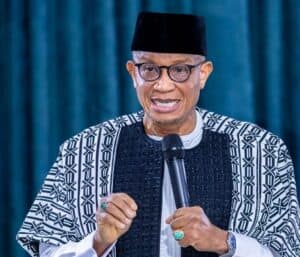
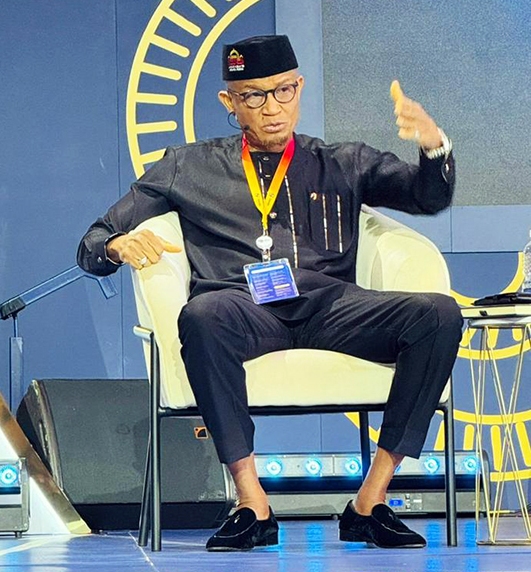
The President of African Refiners and Distributors Association (ARDA), Dr. Mustapha Abdul-Hamid has asked the 54 African countries to stop the dollarization of petroleum products on the continent.
He has also asked the African countries to build integrated infrastructure to guarantee energy security that is independent of developed countries to stabilise their economies.
Mr Mustapha Hamid, who is also the Chief Executive of the National Petroleum Authority (NPA) was speaking at the African Energy Week in Cape Town, South Africa, also called for a halt in the export of crude oil from Africa, insisting that the continent is far from meeting its energy security amid rising population.
He argued that by reducing reliance on foreign currencies for energy transactions, African countries could better stabilise their economies, reduce energy import costs and foster long-term energy security.
Dr Abdul-Hamid stressed the need for Africa to refine and use its own resources rather than export raw crude oil only to re-import refined products.
“Nobody puts crude oil in their vehicle or airplane – everything that generates movement and wealth is a refined product. This underlines the need for closer collaboration between Africa’s upstream and downstream sectors to ensure that the continent fully benefits from its natural resources,” he said.
Dr. Abdul-Hamid proposed a three-tier strategy to promote Africa’s energy independence – policy harmonisation, infrastructure integration and regional currency adoption.
He said Africa’s current fuel specifications differ greatly from one country to another, adding that it is a disparity that creates barriers to regional trade and limits cooperation.
For example, Ghana has a fuel Sulfur limit of 50 parts per million (ppm), while several West African neighbours allow levels between 1,500 and 3,000 ppm, making imports challenging and costly.
“Without a harmonised specification across Africa, trade within the continent remains difficult, restricting our ability to collaborate effectively,” Abdul-Hamid stated.
He also emphasised the importance of collaboration among regulatory bodies, national oil companies and governments to develop a unified approach to energy production and distribution, adding that efforts like Ghana’s policy requiring companies to use locally refined fuel for oil extraction machinery strengthens domestic refinery output.
Dr. Abdul-Hamid advocated for establishing a regional currency that would mitigate the effects of Africa’s dependence on the U.S. dollar.
“Currently, oil marketers in Ghana require $400 million each month to import refined petroleum products – a demand that constantly pressures the Ghanaian Cedi.
“Developing a shared currency within regional blocs like West Africa could reduce these pressures and allow us to strengthen our economies,” he suggested.
Secretary General of African Petroleum Producers Organisation (APPO), Omar Farouk Ibrahim, stressed the need to build robust infrastructure within Africa to reduce dependency on foreign markets.
He cautioned that reliance on imported resources leaves African countries vulnerable to international sanctions and supply disruptions.
“We have vast resources on our continent, yet we often depend on imports for energy. Partnering with neighbouring countries to build the necessary infrastructure can secure our energy needs,” Ibrahim said, adding that developing intra-continental infrastructure is crucial to achieving genuine energy security.
Chief Executive of Association of Oil and Gas Marketing Companies, Riverson Oppong, highlighted Africa’s paradox of exporting raw resources while lacking refined products for domestic use.
Mr Oppong pointed out that nearly 90 per cent of Africa’s crude production is exported.
“We have the resources, but we lack access to them because we are locked into a cycle of exporting raw materials and re-importing finished products. This cycle compromises our economic stability and weakens our energy security,” Mr Oppong noted.
He questioned the rationale behind Africa’s continued export of crude oil only to re-import it as refined petrol, a practice he argued weakens local refineries and increases costs.
“During a recent visit to Morocco, I saw a refinery capable of processing 550,000 barrels per day, sitting idle like a ‘white elephant.’ Why are we sending our crude oil to Europe to be refined, only to bring it back to Africa at a premium?” he asked.
Mr Oppong urged African countries to invest in domestic refining capacity and support local refineries to enhance energy self-sufficiency
Originally published by The Ghanaian Chronicle. Read original article.