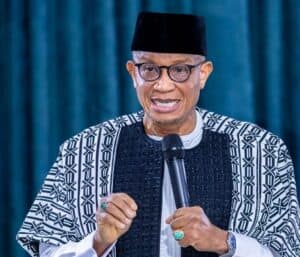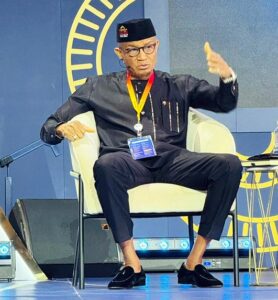

The Africa Public Sector Conference and Awards 2024 (APSCA) has conferred the 2024 Visionary Leadership Award on the Chief Executive of the National Petroleum Authority (NPA), Dr. Mustapha Abdul-Hamid.
The award is in recognition of Dr. Abdul-Hamid’s unwavering commitment to driving positive change and innovation in the public sector.
APSCA has also honoured the NPA as the 2024 Africa Top 50 Innovative Public Sector Agency at the fifth APSCA held in Gaborone, Botswana.
It is recognition of NPA’s exceptional innovation and impact in delivering public services.
Earlier, in a speech on “Innovation in Energy: Key to a Sustainable Future” at the APSCA 2024, held in Gaborone, Botswana, from 2nd to 4th October, 2024 a Deputy Chief Executive of the National Petroleum Authority (NPA), Mr. Perry Okudzeto, urged African countries to invest in energy innovation and infrastructure to ensure a sustainable future for the continent’s growing cities.
He said the future of energy in Africa lies in innovation and indicated that nowhere is this more evident than in the field of renewable energy.
“Africa is blessed with abundant natural resources that can power a sustainable energy future”, he said.
The conference was held on the theme: ‘Promoting Innovation for Sustainable Development.’
Mr. Okudzeto said the future of energy across Africa is full of promise and indicated that whether it is through renewable energy projects or clean cooking solutions, energy innovation has the power to transform lives, uplift communities and drive economic growth.
“As we move forward, let us commit to investing in energy innovation, building the infrastructure of tomorrow and creating a future where every African has access to reliable, affordable and sustainable energy.
“Together, we can power not just homes and industries but the hopes and dreams of millions of people across our continent”, he said.
Mr Okudzeto noted that according to the International Renewable Energy Agency (IRENA), Africa could generate up to 22% of its energy from renewable sources by 2030.
“Solar energy alone has the potential to transform entire regions, particularly in areas where the grid cannot reach. Moreover, renewable energy presents an incredible opportunity for job creation.
“In fact, the African Development Bank (AfDB) estimates that transitioning to a green economy could create up to 3.3 million new direct green jobs across the continent by 2030, with the majority in the renewable energy sector, particularly solar. These are not just jobs in energy production but also in manufacturing, maintenance, and research and development”, he said.
Mr. Okudzeto said to make energy accessible and affordable, Africa must leverage smart technologies that enhance the efficiency of the continent’s energy systems.
He said Artificial Intelligence (AI)-driven energy management systems offer a glimpse into the future, where power is distributed more intelligently across urban grids.
“AI systems could predict energy demand, allowing utilities to adjust supply in real time. Energy flows only where it is needed, and waste is minimized”, he said.
The Deputy NPA CE called for Public-Private Partnerships and significant investment in energy infrastructure in the coming decades.
“While governments have a critical role in driving energy innovation, public-private partnerships (PPPs) are essential for scaling these solutions. The private sector brings the necessary investment, technology, and expertise, while governments provide the regulatory framework that ensures success,” he said.
Mr. Okudzeto said while renewables are being developed, natural gas has been established as the bridging fuel for energy transition due to its low carbon emissions compared to coal and crude oil. He said some cities in Africa are leading the way by using natural gas as an alternative to other fossil fuels for power generation – thereby reducing emissions, particularly in transportation and ensuring stable electricity.
He said health outcomes in urban and rural households, especially in areas where traditional biomass is still used for cooking, can still be improved by shifting to Liquefied Petroleum Gas (LPG) and other cleaner forms of energy for cooking”, he stressed.
Mr. Okudzeto said energy transition in Africa cannot be approached with the same strategies used in wealthier regions.
“We must produce and consume more carbon in the short-to-medium term to bridge our development gap, even as we aggressively pursue renewable energy solutions.
“After all, the key to sustainable development is not just about moving toward clean energy but ensuring that no one is left behind as we do so”, he said.
Originally published by The Ghanaian Chronicle. Read original article.