NPA Receives Plaudits from Mines and Energy Committee for Effective Regulation

NPA Receives Plaudits from Mines and Energy Committee for Effective Regulation

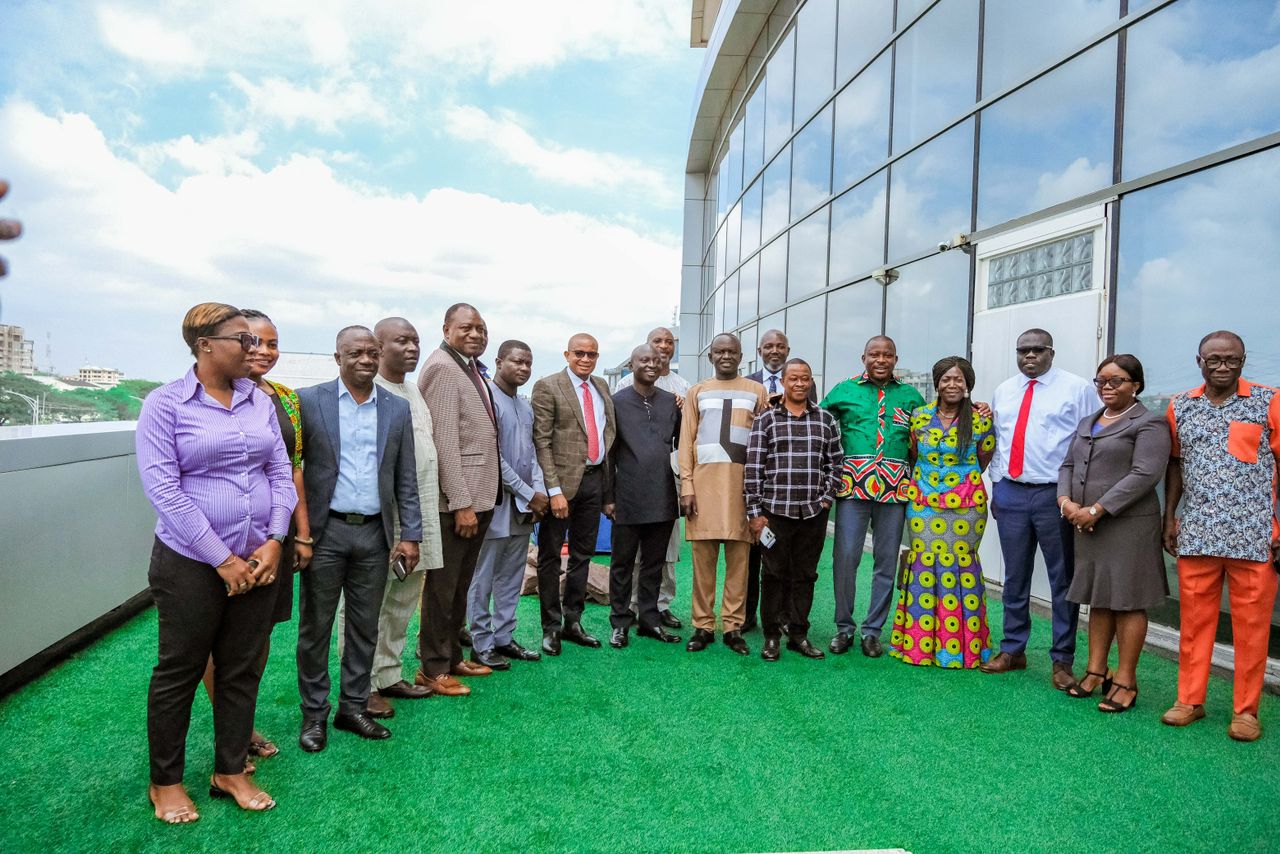
Accra, Dec 5, GNA – Members of the Parliamentary Select Committee on Mines and Energy have lauded the National Petroleum Authority (NPA) for effective regulation of the petroleum downstream industry in the country.

As part of their oversight mandate, the Committee visited the Head Office of the NPA to engage management on a range of issues, particularly regarding the Cylinder Recirculation Model (CRM) and technologies used in the distribution petroleum products.

In his welcome remarks, NPA Chief Executive, Dr. Mustapha Abdul-Hamid expressed joy that the MPs had found time to come and see how the Authority worked to ensure the effective operation of the petroleum downstream industry.

He welcomed the Committee’s interest to visit some industry installations and indicated that it would provide insight into the operations of the industry and guide their decision making as overseers to in turn give the NPA guidance to have a more efficient downstream.

Responding, Mr. Atta Akyea said the visit to the NPA was in line with the oversight responsibility of Parliament.

He said although the debate on the 2024 budget was ongoing in Parliament, members of the committee had found time to visit the NPA because of the importance they attached to the work of the Authority.

Dr. Abdul-Hamid and his deputies, Mr. Perry Okudzeto and Mrs. Linda Asante and the various Directors and Heads of Department held a meeting with the Committee during which some presentations were made followed by discussion of pertinent concerns.

The MPs were also taken through the operations in the National ECTS Command Centre, housing the BRVTS and the National Retail Outlet Automation Architecture.

Members of the Committee were thrilled with the use of modern technological tools, such as the Bulk Road Vehicle Tracking System (BRVTS), the national fuel marking system, and the Enterprise Relational Database Management System (ERDMS) to curb third-party transactions, diversions, tampering and improve revenue generation.

The Committee also expressed satisfaction with the measures and strategies put in place to ensure the smooth implementation of the CRM.

The second part of the programme was a visit to some LPG Storage and Bottling Plant Facilities in Tema. The NPA team led by the CE and the MPs visited the Quantum Terminals Group’s LPG Storage Facility and the New Gas Bottling Company Plant in Tema.

The Committee was informed that the $16 million Bottling Plant currently had two units; one with the capacity to fill 1,800 pieces of 6kg and 12.5kg cylinders per hour, while the other unit could fill up to 1,400 pieces of 3kg cylinders per hour respectively.

The company informed the Committee of its readiness to serve Ghanaians with LPG at their doorstep.

Members of the Committee were impressed with the facilities and assured their support for such investments to improve Ghana’s petroleum downstream sector.


Originally published by Ghana News Agency. Read original article.
Share:

Share:

More Posts

Campaign events and engagements will be announced here. Check back soon or sign up for updates.

Delegate Engagement

Delegate Engagement

To Be Announced · Location To Be Confirmed

Details TBA
Regional Meeting

Regional Consultative Meeting

To Be Announced · Location To Be Confirmed

Details TBA
Constituency Visit

Constituency Leadership Meeting

To Be Announced · Location To Be Confirmed

Details TBA
Scroll to Top

About Shaykh Mustapha Abdul-Hamid Ph.d

Scholar. Public Servant. Communicator. Leader.

Shaykh Mustapha Abdul-Hamid is a distinguished Ghanaian scholar, public servant, communicator, and policy leader whose career has been defined by service, leadership, and national development.

With decades of experience spanning academia, governance, public communication, energy sector leadership, and community engagement, he has consistently contributed to shaping conversations and policies that impact the lives of Ghanaians.

Born in Tamale in the Northern Region of Ghana, Shaykh Mustapha Abdul-Hamid’s educational journey began at Station Experimental Primary School before continuing at Bawku Secondary School and Tamale Secondary School. He later attended the University of Cape Coast, where he pursued Religious Studies and went on to earn both an MPhil and PhD.

As an academic and lecturer, he dedicated years to teaching, research, mentorship, and intellectual engagement, with particular interests in religion, society, leadership, and public discourse. His commitment to education and youth empowerment continues to influence his work and vision for national development.

Over the years, Shaykh Mustapha Abdul-Hamid has served Ghana in several strategic leadership positions. He served as Minister for Information, where he played a central role in communicating government policy and strengthening public engagement. He also served as Minister for Inner City and Zongo Development, helping advance initiatives focused on inclusion, infrastructure, and opportunity for underserved communities.

In the energy sector, he served as Chief Executive of the National Petroleum Authority (NPA), where he contributed to policy direction, regulatory oversight, and institutional leadership within Ghana’s downstream petroleum industry. His leadership and expertise later earned him election as President of the African Refiners and Distributors Association (ARDA), a continental body representing stakeholders within Africa’s refining and downstream petroleum sectors.

Beyond public office, Shaykh Mustapha Abdul-Hamid remains deeply committed to mentorship, youth development, education, leadership, and national transformation. His philosophy of leadership is rooted in service, integrity, discipline, and the belief that meaningful progress must create opportunities for all people, especially the younger generation.

Throughout his journey, he has remained passionate about building stronger institutions, empowering communities, encouraging dialogue, and contributing to a more prosperous and united Ghana.

“Leadership must create opportunities that improve lives and inspire future generations.”
— Shaykh Mustapha Abdul-Hamid